
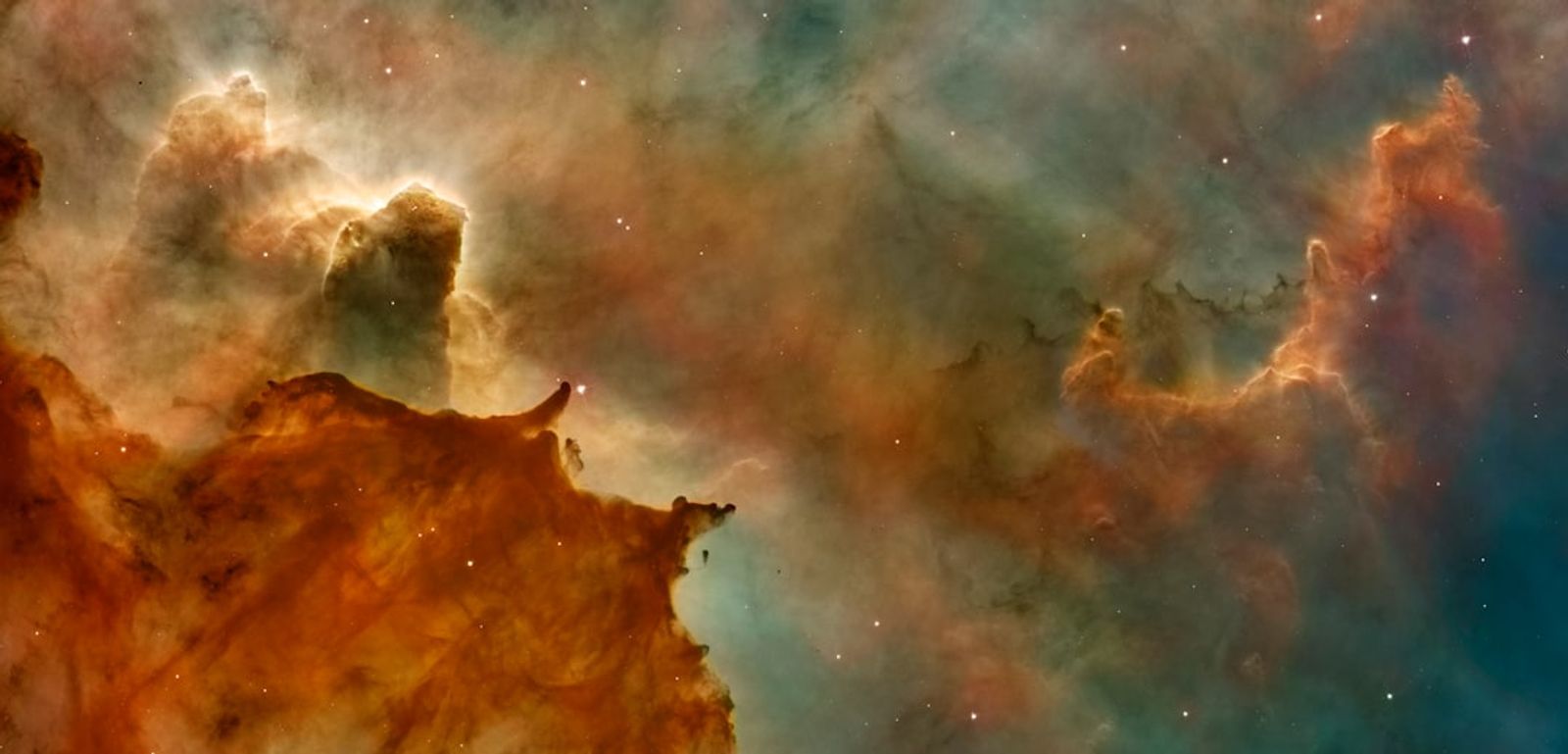
The scientific community recently unveiled the most expansive two-dimensional map of the universe to date, a staggering achievement that catalogs billions of galaxies across a vast expanse of the sky. As a technologist, it is impossible not to marvel at the sheer scale of data orchestration required to pull this off. This map is not just an astronomical milestone; it is a monument to modern distributed computing, showcasing how collaborative pipelines can stitch together petabytes of raw observational data into a cohesive visual database.
On the positive side, this dataset represents a goldmine for machine learning and computer vision. By providing such a high-resolution, contiguous playground of celestial objects, researchers can train neural networks to detect patterns, classify galaxies, and identify gravitational lensing events with unprecedented speed. The open-access nature of this data democratizes certain aspects of astronomical research, allowing developers worldwide to apply cutting-edge data science techniques to cosmological mysteries.
However, we must critically evaluate the limitations of a two-dimensional approach to an inherently multi-dimensional reality. A flat map, no matter how detailed, inevitably introduces projection biases and compresses the critical dimension of depth. By focusing heavily on 2D mapping, we risk prioritizing surface-level statistics over the complex, three-dimensional cosmic web. This flat perspective can obscure the actual physical relationships and distances between cosmic structures, reminding us that visualization compromises are always made when flattening our reality.
Furthermore, the sheer volume of this release highlights a growing crisis of data gravity and computational inequality in science. Processing and querying a dataset of this magnitude requires specialized, high-performance computing infrastructure that is financially out of reach for many smaller institutions. As we celebrate these massive data releases, we must also confront the environmental footprint of running massive server farms to process them, and ask whether our algorithms are efficient enough to justify the carbon cost of their computational cycles.
Ultimately, the worlds largest 2D map of the universe is a double-edged sword. It stands as a brilliant testament to what humanity can catalog when we combine astronomical instrumentation with cloud-scale software engineering. Yet, it also serves as a warning that bigger is not always better if the data becomes too bloated to analyze democratically or lacks the dimensional depth required for true physical breakthrough. The next frontier is not just mapping more, but developing the smart, lightweight tools needed to actually understand what we have already mapped.