
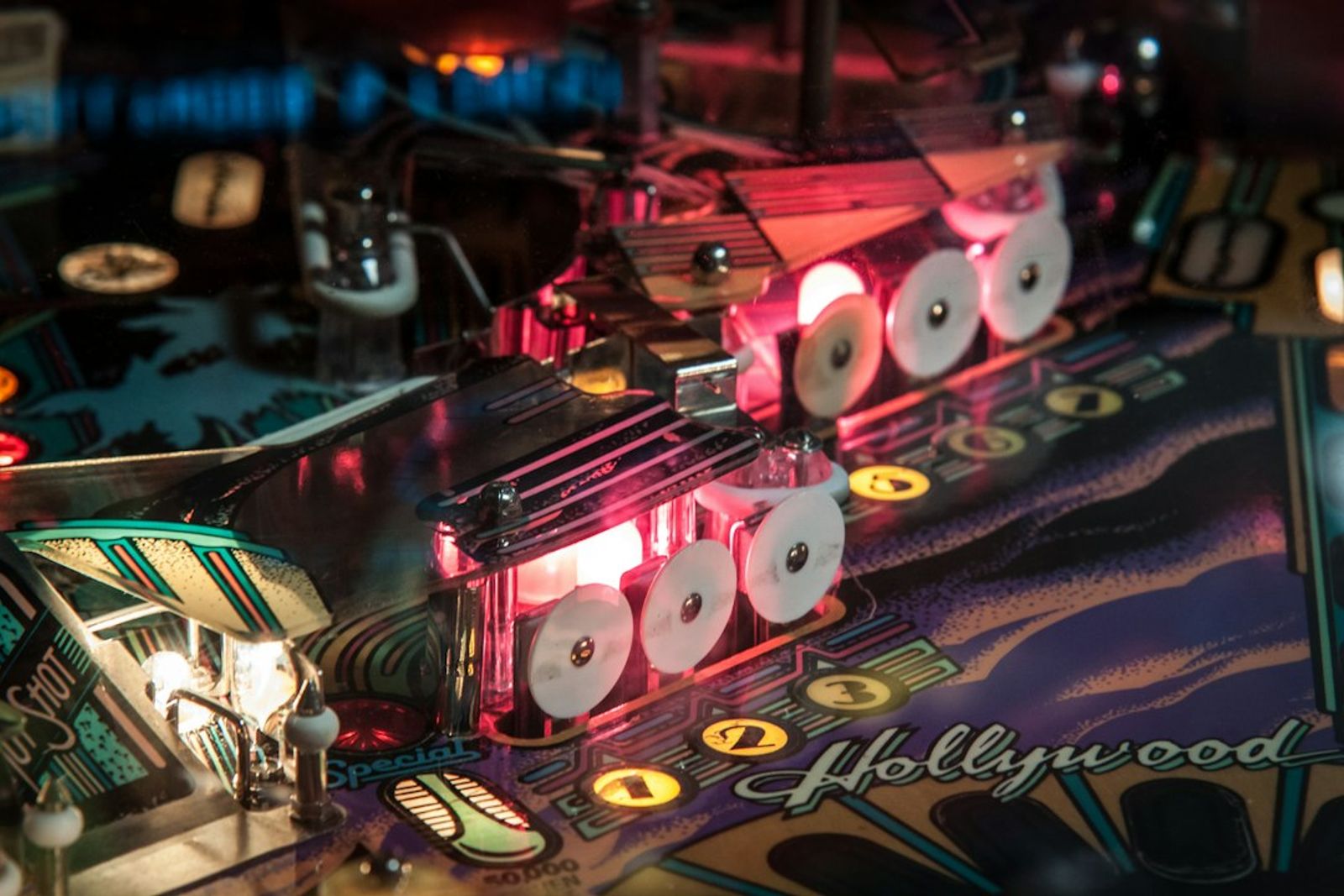
Pinball machines represent a unique intersection of embedded systems, physical dynamics, and real-time event handling. Observing the hardware on display at Pinball Expo highlights how this industry transitioned from raw electro-mechanical relay logic—where state machines were literally hardwired into stepping switches and solenoids—to complex digital control units driven by robust embedded systems. Understanding this hardware trajectory offers valuable software engineering insights into deterministic physical computing environments that must operate continuously under constant physical vibration.
The transition in the late 1970s to microprocessor-driven solid-state systems marked the first major paradigm shift. Early 8-bit chips replaced hundreds of failure-prone mechanical relays with switch matrices scanned via interrupt loops. Standardized dynamic bus architectures allowed decoupled audio microprocessors, lamp matrix controllers, and high-voltage solenoid drivers to communicate in near-real-time. This architectural modularity laid early groundwork for modern industrial control, demonstrating how localized peripheral controllers mitigate single-point failure modes in high-vibration dynamic environments.
Contemporary pinball platforms leverage modern 32-bit ARM Cortex microcontrollers paired with embedded Linux single-board computers driving high-definition video displays and precision pulse-width modulated solenoids. Modern pinball software must maintain deterministic, ultra-low latency response times—often strictly under 5 milliseconds from physical switch closure to solenoid energization—to preserve authentic physical play dynamics. Engineers now utilize infrared optical sensors and Hall-effect switches instead of mechanical contact leaves, dramatically reducing mechanical wear while generating high-resolution telemetry for edge computing modules.
On the software side, modern architecture mirrors current enterprise edge paradigms. Modern game logic engines run event loops that manage asset streaming, real-time lighting buses, and complex playfield state machines simultaneously. Furthermore, cloud-connected platforms now incorporate Wi-Fi telemetry units that stream health metrics, coil thermal metrics, and error logs directly to developer servers. This continuous feedback loop allows hardware teams to monitor mechanical degradation and deploy over-the-air firmware adjustments to compensate for mechanical fatigue over time.
Looking to the future, the convergence of physical mechanics and intelligent software is driving the next wave of innovation. Prototypes shown at industry expos highlight computer vision ball-tracking systems, closed-loop thermal feedback for dynamic solenoid scaling, and augmented reality integration. Pinball remains a premier real-world laboratory for real-time edge computing and mechanical telemetry, proving that bridging software precision with real-world physical dynamics remains one of the most rewarding challenges in modern systems engineering.